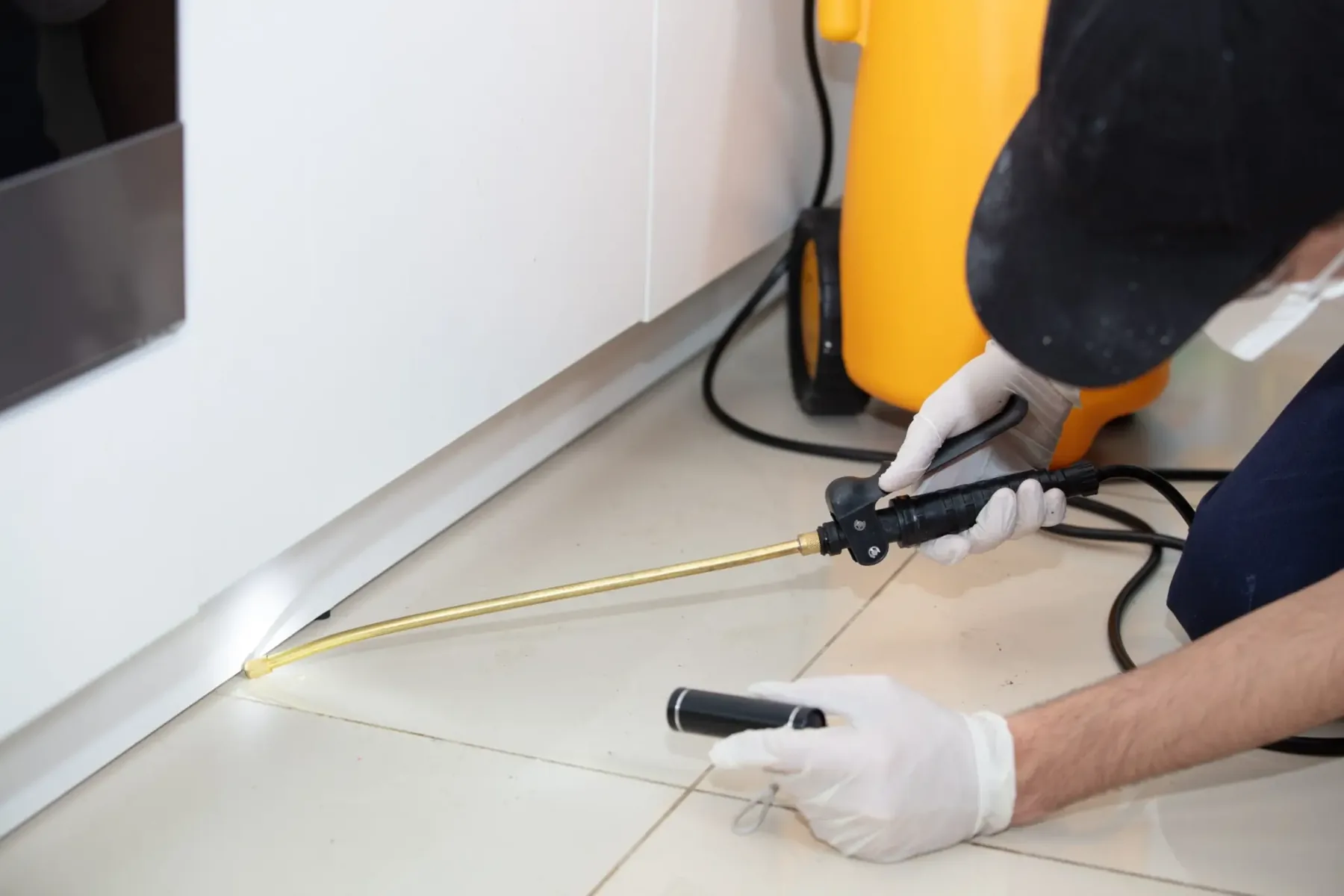
Bloomington properties move through several different pest pressures in a single year. Spring moisture can bring ants and other insects toward food and shelter. Summer adds mosquitoes, spiders, wasps, and activity around patios, gardens, and shaded edges. Fall can push rodents and overwintering insects toward warmer openings, while winter often makes indoor signs more noticeable because homes, rentals, and businesses are closed up. A useful prevention routine is not about guessing every pest. It is about noticing the conditions that make a space easier to enter, feed in, or hide around.
Spring: look for moisture and first trails
When rain and warmer days arrive, walk the outside edge of the property after the ground has had time to dry. Look at door thresholds, foundation seams, window trim, hose connections, planters, and areas where mulch or leaves stay damp. You do not need to identify every insect. A line of ants that appears near a sink, porch, or foundation is more useful when you note the direction of the trail and whether it returns after cleaning. Small leaks and standing water deserve attention because they can affect both insects and the way people use the space.
Inside, check pantry shelves, pet-food areas, bathrooms, and utility openings for repeat activity. Store dry goods in closed containers, wipe food residue, and keep screens and door sweeps in workable condition. If a trail keeps returning, record the room and time of day before reaching for a product. A short note about rain, temperature, and location can make a spring service conversation much more focused.
Summer: protect the spaces you want to use
Summer pest concerns often show up where people spend more time outside. Check patio edges, play areas, gardens, porch ceilings, outdoor lights, trash areas, and shaded corners for webs, nests, or standing water. Mosquitoes can breed in small containers that collect water, including buckets, toys, planters, drains, and neglected equipment. Empty, scrub, cover, or turn over those items weekly when practical, and repair holes in screens so indoor spaces remain easier to use.
Wasps and hornets deserve distance rather than close inspection. From a safe position, note whether traffic follows an eave, soffit, roofline, tree, or opening. Do not knock down, burn, seal, or spray an active nest. For spiders, notice whether webbing returns in the same corner and whether other insects are present. These observations help distinguish an occasional outdoor sighting from a repeated perimeter concern without asking you to handle unknown insects.
Fall: make entry points easier to see
As evenings cool, inspect the places where a building meets the outdoors. Doors, windows, vents, utility lines, garages, crawl-space openings, and foundation edges can all become more noticeable as activity shifts. Look for gaps, loose weather stripping, damaged screens, or vegetation that touches the structure. Store firewood and unused materials away from the building, keep cardboard from accumulating, and make sure waste containers close fully. These are ordinary maintenance steps, but they also make it easier to understand where signs may be entering.
Rodent clues can include droppings, scratching, gnaw marks, damaged packaging, or nesting material. Record the room and direction of the sound rather than opening a wall or moving hidden items. If a rental or shared building is involved, note which unit or common area is affected and tell the property contact. Shared walls and utility routes can make a small sign more important to describe clearly.
Winter: do not dismiss indoor signs
Winter can make pest activity feel sudden because doors stay closed, windows are used less often, and people spend more time in the rooms where signs appear. A mouse sound in a wall, a roach near a warm appliance, or a spider in a basement may be connected to conditions that existed earlier in the year. Note whether activity is repeated, which rooms are involved, and whether food, moisture, warmth, or stored materials are nearby. Keep food sealed and reduce clutter where practical, but avoid disturbing hidden nests or suspected openings.
A winter walk-through can be simple. Check under sinks, around appliances, near basement storage, beside doors, and along accessible foundation edges. Write down what changed since fall: a new delivery, a repair, a move-in, a storm, or a change in how the room is used. Those details give a service conversation a timeline instead of a single unexplained sighting.
A routine that works across the year
The most useful seasonal checklist is short enough to repeat. Notice the outside edge, review food and waste storage, check for moisture, keep screens and door seals in mind, and record recurring signs with a date and location. If children, pets, tenants, customers, or shared spaces are involved, include that context before service is discussed. You do not need to create a perfect inspection report.
When the same concern returns after cleaning or a weather change, that pattern is worth sharing. Neighborly Pest Control Service helps Bloomington property owners organize what they are seeing across the seasons so the next conversation starts with a practical description of the space, not a guess about every possible pest.
FIELD NOTE: Keep the checklist simple: location, timing, moisture, entry points, food or waste, and what changed nearby.