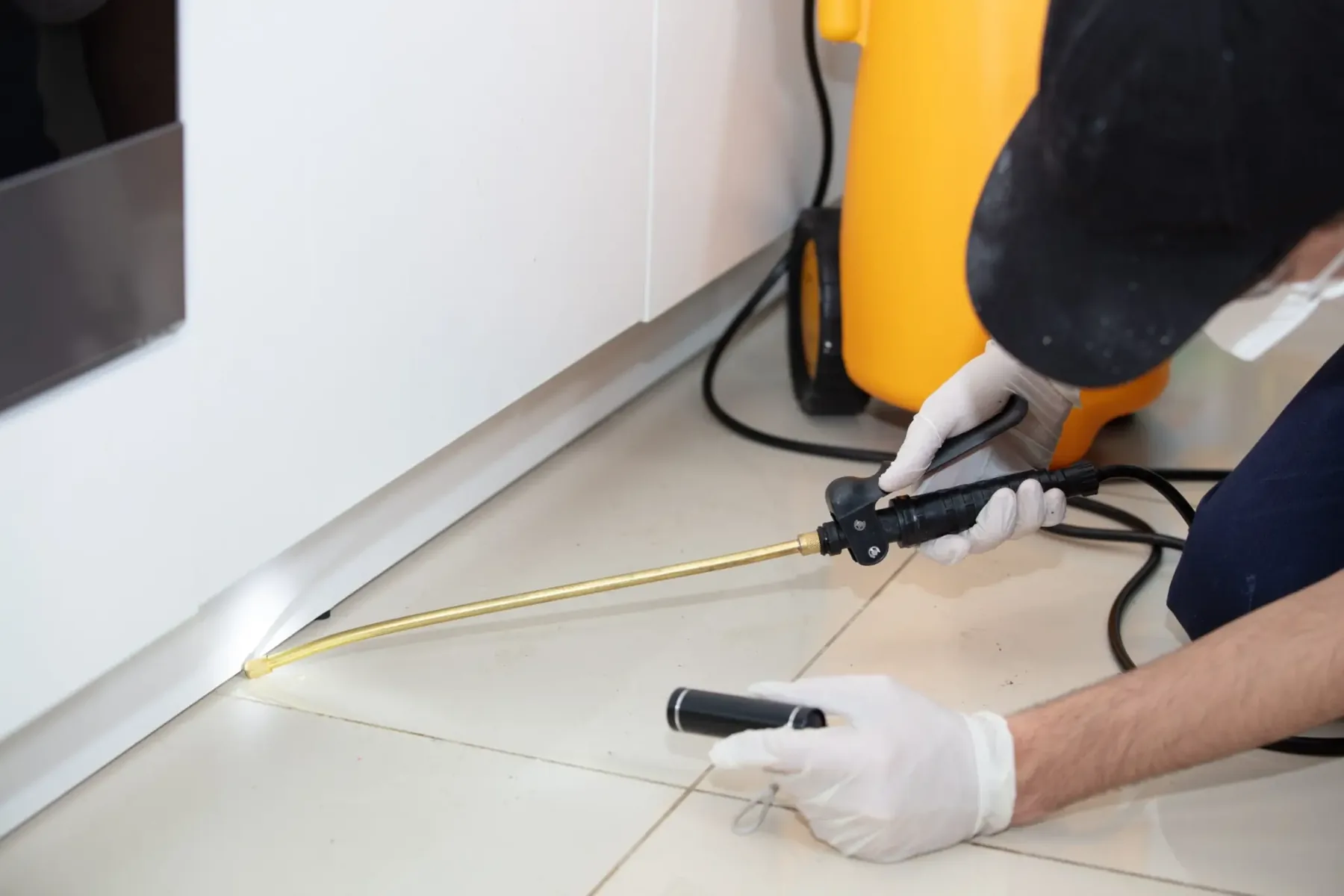
Ants are small, but a recurring trail can make a room feel out of control quickly. You wipe the counter, clean the floor, and the line appears again near a sink, pantry, pet dish, window, or foundation edge. In Bloomington, rain, warm weather, food residue, moisture, landscaping, and small entry points can all shape where ants travel. A surface-level response may remove the visible trail without explaining why the route keeps rebuilding. The more useful question is not only “How do I get rid of the ants?” It is “What is bringing them through this space, and what details will help me discuss the next step?”
A trail is a route, not the whole story
Foraging ants follow repeatable paths between shelter and a food or moisture source. A trail may begin at an exterior foundation seam, a window, a plumbing opening, a door threshold, or a hidden gap near a cabinet. Inside, it may run toward crumbs, pantry items, pet food, recycling, a damp cloth, a leak, or a plant. Note the direction of travel and what happens when the nearby source is cleaned. If the route disappears and returns from another edge, write down that change instead of assuming the problem is solved.
Different ants can also behave differently. You may notice tiny ants near a sink, larger ants around a damp section of wood, or winged ants during a seasonal period. You do not need to identify the species before contacting service. A safe description of size, location, timing, and repeat behavior is enough to begin.
Why cleaning may not end the pattern
Cleaning removes visible food and scent, but it may not change the conditions around a trail. A small leak, damp soil, mulch against a foundation, plant contact, or gap around a pipe can keep the route useful. Ants may also shift to a nearby path when one line is interrupted. That is why a quick surface treatment can sometimes seem to work for a day and then fail to explain the return.
Start with practical housekeeping: wipe food residue, store pantry goods closed, empty pet dishes, secure trash, and address accessible moisture. Then watch what happens. If activity keeps returning to the same room or moves between indoor and outdoor edges, record the pattern. The timing after rain or cleaning can be as important as the number of ants you see.
Where Bloomington homeowners often notice trails
Kitchens and bathrooms are common because food, water, plumbing, warmth, and cabinet gaps are concentrated there. Porches, patios, gardens, garages, and foundation edges can show activity after rain or landscape changes. Rentals and shared buildings may add connected walls, common trash areas, utility routes, and neighboring units. A trail in a downtown apartment may need a different conversation from a trail running along a detached garage or garden bed.
Walk the property as you normally use it. Check where the trail begins, what surface it follows, and whether it disappears at a wall, cabinet, threshold, or foundation. Avoid opening a wall or flooding a gap with a product you have not discussed. A short photo from a safe position and a note about room and time can preserve the useful context.
What to record before you call
Write down when you first noticed the trail, whether it appears at the same time each day, and what weather or household activity happens around it. Note whether the ants are inside, outside, or moving between both. If you see wings or multiple sizes, include that without trying to handle them. If a child, pet, tenant, or customer uses the area, say so.
If you have already cleaned, sprayed, or sealed something, include that too. Service conversations work better when previous steps are visible rather than hidden. The goal is not to prove what the colony is doing. The goal is to make the pattern easy to discuss so the next step can focus on the property conditions that matter.
A calm plan beats a repeated reset
Recurring ants can be frustrating because the visible line is easy to see while the cause may stay hidden. Keep the food and moisture basics in place, observe the route, and avoid moving the concern from one room to another with scattered products. If the trail continues, tell Neighborly where it starts, how often it returns, and what changed around the property.
A useful ant-control conversation may include the room, exterior edge, foundation, windows, plumbing, storage, pet areas, and recent weather. That information gives a local service provider a more grounded starting point than a single photo or a broad assumption. Your notes do not have to be perfect; they just need to be specific enough to show the pattern.
FIELD NOTE: A returning trail deserves a location, timing, moisture, food, and entry-point note before the next product or repair is chosen.